
Have you ever wanted straighter teeth but felt unsure about wearing braces as an adult? You are not alone. Many adults want to improve their smiles while balancing work, family responsibilities, social events, and everyday routines.
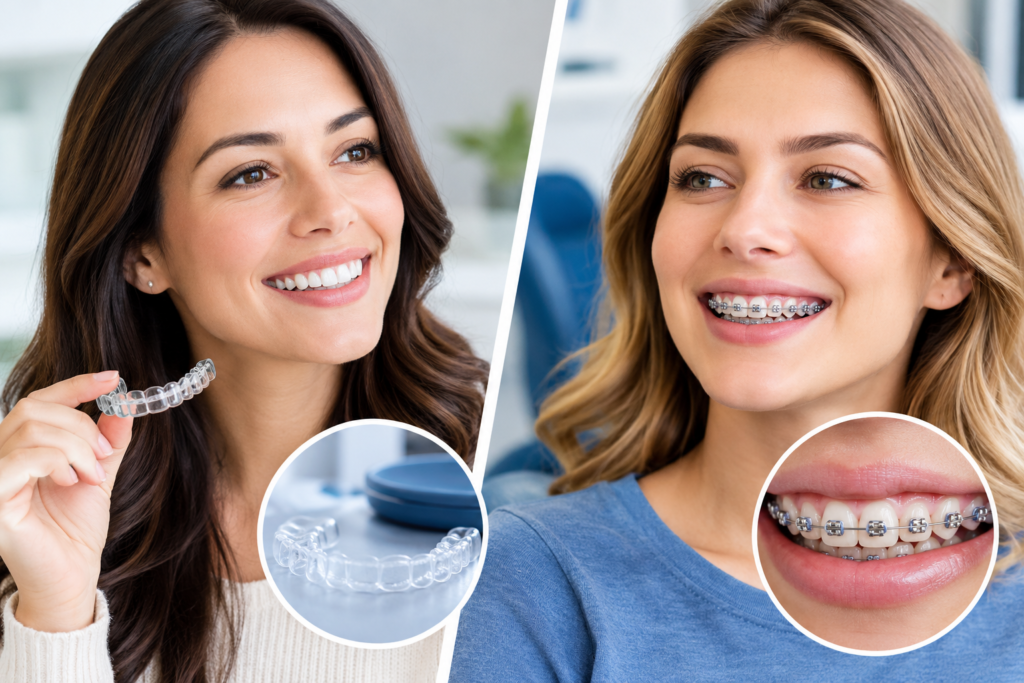
The good news is that modern orthodontic treatments offer more choices than ever. Traditional braces can straighten teeth with brackets and wires, while Invisalign uses clear, removable aligners that gradually move teeth into better positions.
But which option is right for you?
If you are searching for Invisalign vs Braces Puyallup WA, understanding the differences in appearance, comfort, treatment time, cost, and daily care can help you make a confident decision.
Let’s compare both treatments and look at what adults should know before starting their smile transformation.
What Is Invisalign?
Invisalign is an orthodontic treatment that uses a series of custom-made, clear plastic aligners to move teeth gradually. Each aligner is designed to fit your teeth and apply controlled pressure according to your treatment plan.
Because the trays are transparent, they are less noticeable than traditional metal braces. You can also remove them when eating, drinking anything other than water, brushing, and flossing.
Benefits of Invisalign for Adults
Invisalign can be a convenient option for adults who want to straighten their teeth without visible metal brackets.
Some of its main benefits include:
Discreet appearance: Clear aligners are difficult to notice during everyday conversations.
Removable trays: You can take them out for meals and oral hygiene.
Easier cleaning: Brushing and flossing are generally simpler without brackets and wires.
No food restrictions caused by brackets: You can remove the aligners before eating, although you should still maintain a balanced diet.
Smooth design: The plastic trays do not have the metal brackets and wires associated with traditional braces.
For successful treatment, patients generally need to wear their aligners around 20–22 hours per day, following their dentist’s instructions.
Invisalign may be suitable for adults with mild to moderate crowding, gaps, and certain bite problems. More complex cases may require braces or another orthodontic approach.
What Are Traditional Braces?
Traditional braces use brackets attached to the teeth and connected with wires. These components apply controlled pressure to move teeth into their planned positions over time.
Unlike Invisalign, braces remain attached throughout treatment. Your dentist or orthodontist adjusts them during scheduled visits to guide tooth movement.
Benefits of Braces for Adults
Braces remain a dependable treatment option for many types of orthodontic problems.
Here are some advantages:
Broad treatment capabilities: Braces can correct many alignment and bite issues, including complex cases.
Continuous action: They work without requiring you to remember to put them back in after meals.
No removable trays to lose: The appliance stays attached to your teeth.
Different styles: Depending on availability and clinical suitability, options may include metal braces, ceramic braces, and other designs.
Braces can take some adjustment at first. You may experience temporary soreness after placement or adjustments, and brackets or wires can occasionally irritate the inside of your cheeks and lips.
Your dental professional will explain how to clean around the brackets and which foods to avoid during treatment.
Invisalign vs Braces Puyallup WA: What Are the Main Differences?
Both Invisalign and braces can improve tooth alignment, but they fit different lifestyles and treatment needs.
| Feature | Invisalign | Traditional Braces |
|---|---|---|
| Appearance | Clear and less noticeable | Metal brackets and wires are more visible |
| Removability | Removable for meals and cleaning | Fixed throughout treatment |
| Eating | Remove aligners before eating | Some hard, sticky, and chewy foods should be avoided |
| Oral hygiene | Brush and floss without brackets in the way | Requires careful cleaning around brackets and wires |
| Comfort | May cause pressure or temporary soreness | May cause pressure and irritation from brackets or wires |
| Compliance | Requires consistent daily wear | Works continuously without daily insertion and removal |
| Complex cases | Suitable for many cases, but not every case | Can treat a wide range of alignment and bite problems |
| Appointments | Periodic checks and aligner reviews | Periodic adjustments and progress checks |
| Cost | Varies with case complexity and treatment plan | Varies with appliance type and treatment needs |
Neither option is automatically better for every adult. The right choice depends on your teeth, bite, oral health, personal preferences, and ability to follow treatment instructions.
Which Treatment Is More Comfortable?
Comfort is an important consideration, especially if you have never had orthodontic treatment.
Invisalign aligners are made from smooth plastic, so they generally avoid the cheek and lip irritation associated with brackets and wires. Still, you may feel pressure or soreness when you begin a new set of aligners.
Traditional braces can also cause temporary soreness, particularly after placement and adjustment appointments. Brackets or wires may irritate soft tissues until your mouth adapts.
Both treatments involve moving teeth, so some discomfort is normal. Your experience will depend on your individual needs and response to treatment.
If you have concerns about pain or sensitivity, discuss them with your dental professional before starting.
Which Option Straightens Teeth Faster?
Treatment time varies according to the amount of movement needed, the complexity of your bite, and how closely you follow the treatment plan.
Some Invisalign cases can be completed within several months, while others take a year or longer. Traditional braces may also take months or several years, depending on the problem being corrected.
It is not accurate to assume that Invisalign is always faster than braces.
For example, a patient with minor spacing may need less time than someone with significant crowding or a complicated bite. Invisalign treatment can also take longer if aligners are not worn for the recommended number of hours.
Your dentist or orthodontist can estimate your treatment timeline after examining your teeth.
Is Invisalign More Expensive Than Braces?
The cost of orthodontic treatment depends on several factors, including the complexity of your case, treatment length, appliance type, and dental office fees.
Invisalign can cost more than traditional braces in some cases, but the price difference is not the same for every patient.
Before choosing a treatment, ask your dental office for a detailed estimate covering the entire process.
It is also worth asking about:
Dental insurance coverage for orthodontic treatment.
Monthly payment plans or financing options.
The cost of replacement aligners or repairs, if needed.
Retainers after treatment.
Any additional appointments or procedures included in the fee.
The cheapest option is not always the best fit. Choose a treatment that meets your clinical needs and works with your budget.
How Do Invisalign and Braces Affect Daily Life?
Your daily routine can make a real difference when choosing an orthodontic treatment.
Eating and Drinking
Invisalign aligners should be removed before meals and before drinking anything other than water. You should brush your teeth or rinse as directed before putting them back in.
With braces, you can eat with the appliance in place, but hard candy, ice, sticky sweets, and very hard foods can damage brackets or wires. Your dental professional will give you a suitable food guide.
Brushing and Flossing
Invisalign makes it easier to brush and floss because the trays come out. However, you must clean both your teeth and your aligners regularly.
Braces require extra attention around brackets and wires. Interdental brushes and floss threaders can help clean areas that are harder to reach.
Good oral hygiene is essential with both treatments to help reduce plaque buildup, gum inflammation, and the risk of white spots on teeth.
Work and Social Events
Adults who regularly attend meetings, give presentations, or meet clients may appreciate Invisalign’s discreet appearance.
Braces remain a practical choice for people who prefer a fixed appliance and do not want to manage removable trays throughout the day.
Think about your daily habits before deciding. A treatment that fits your lifestyle is often easier to maintain consistently.
Who Is a Good Candidate for Invisalign?
Invisalign may be a good option for adults who want a less noticeable way to straighten their teeth and are comfortable following a strict wear schedule.
It may suit people who have:
Mild to moderate crowding.
Small gaps between teeth.
Certain overbites, underbites, or crossbites.
Teeth that have shifted after previous orthodontic treatment.
A preference for removable aligners.
However, Invisalign is not appropriate for every orthodontic problem. Some complex tooth movements are more predictable with braces or a combined treatment approach.
Healthy teeth and gums are also important before orthodontic treatment begins. If you have cavities or active gum disease, these problems may need attention first.
A dental assessment can help determine which treatment options are suitable for your smile.
How Can You Choose Between Invisalign and Braces in Puyallup?
The best way to choose is to start with a professional evaluation rather than selecting a treatment based only on appearance or cost.
During your consultation, your dental professional may examine your teeth and bite, review your dental history, and discuss the changes you would like to achieve.
You can then compare suitable options based on your needs.
Before making a decision, ask these questions:
Which treatment can address my specific alignment or bite problem?
How long is my treatment likely to take?
What is the estimated total cost?
How often will I need appointments?
What daily responsibilities will I have during treatment?
Will I need retainers after my teeth are straight?
If you are researching Invisalign vs Braces Puyallup WA, these questions can help you move beyond general comparisons and find a solution based on your own dental needs.
Frequently Asked Questions
1. Can adults get Invisalign or braces at any age?
Adults can receive orthodontic treatment at many ages, provided their teeth and gums are healthy enough for treatment. A dental professional can assess your oral health and recommend appropriate options.
2. Is Invisalign less noticeable than braces?
Yes. Invisalign aligners are made from clear plastic and are generally less noticeable than traditional metal braces. Ceramic braces may offer a less visible alternative to metal brackets.
3. Can Invisalign correct an overbite?
Invisalign can correct certain overbites, but suitability depends on the severity and cause of the bite problem. Some cases may respond better to braces or a different treatment plan.
4. Do I need a retainer after Invisalign or braces?
Most patients need retainers after orthodontic treatment to help keep their teeth in their new positions. Your dental professional will explain how often to wear them and how to care for them.
5. Which is better for adults: Invisalign or braces?
Neither treatment is best for everyone. Invisalign may suit adults who prefer removable, discreet aligners, while braces may be more appropriate for certain complex alignment problems. A professional assessment is the best way to compare your options.
Start Your Smile Journey with Puyallup Dentistry
A straighter smile can make everyday moments feel more comfortable and help you feel confident about your appearance. The first step is understanding which orthodontic option fits your needs.
At Puyallup Dentistry, you can learn more about your dental care options and discuss your smile goals with a dental professional.
If you are comparing Invisalign and braces, arrange a consultation to discuss your alignment concerns, expected treatment time, costs, and suitable options.
Ready to take the next step toward a straighter smile? Contact Puyallup Dentistry today to discuss your goals and ask about available orthodontic treatment options.